An 80 ton off-road mining dump truck is only as productive as the loading tool in front of it and the ramp behind it. Body volume, bucket size, material density and gradient limits decide whether a 45 m³ body leaves the face full or half empty, and whether the truck keeps its cycle time on the way up the ramp. The PX115MT 80 Ton Off-road Mining Dump Truck is a useful reference point for that calculation: 80,000 kg payload on a 115,000 kg gross weight, a 6,350 mm body, and a 30 percent gradeability rating. This guide works through the matching arithmetic, the two powertrain options, and the checks worth running before an order is fixed.
The number on the badge is payload, not kerb weight. The PX115MT carries 80,000 kg of rock per trip, weighs 35,000 kg empty, and is rated to 115,000 kg gross. That means roughly 70 percent of every trip is material that can be sold, and 30 percent is the truck itself.
That ratio is the honest starting point for a cost per ton calculation. Fuel, tyres, brake life and haul-road wear all scale with gross weight, while revenue scales with payload. Two trucks quoting the same payload can sit more than a tonne of structure apart, and that difference compounds across a fleet over a year of double shifting.
Practical takeaway: Before comparing prices, compare payload divided by gross weight. Then compare the axle ratings that carry that ratio, because a light chassis is only an advantage if the axles and frame are rated for the duty.
The PX115MT body measures 6,350 x 3,550 x 2,000 mm with a flat capacity of 45 m³. Its side height and width set the loading target: a loader or excavator working at that height should complete the load in a predictable number of passes, not in a variable count that depends on how the operator feels that shift.
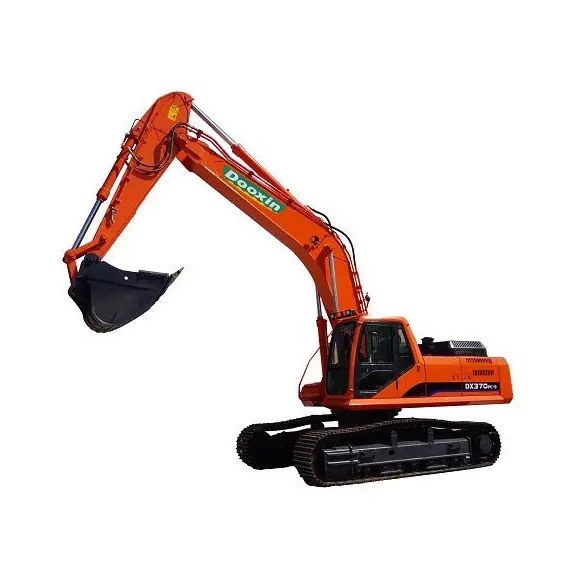
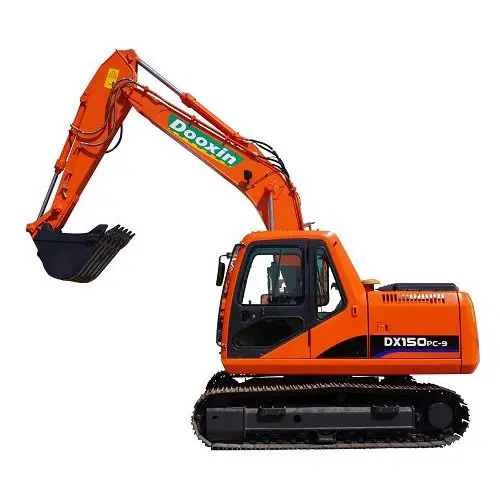
As illustration only: a 3.0 m³ bucket needs about 15 passes to reach 45 m³, a 4.0 m³ bucket around 11 to 12, and a 5.0 m³ bucket around 9. Uneven pass counts are one of the most common reasons a haul fleet loses time at the face, because the truck waits or leaves underloaded.
Important: Match the loader to the body and the loading height, not to the truck's nominal tonnage. An oversized bucket that cannot clear the side height safely adds cycle risk without adding payload.
Two limits apply to every load: 45 m³ of space and 80,000 kg of payload. Which one binds first depends entirely on what is being hauled.
The practical consequence is that a 45 m³ body is a good compromise for a mixed pit, but a dedicated operation should specify around its dominant material rather than accepting a general-purpose compromise.
Gradeability is usually read as a single brochure figure. In practice it defines the ramp the truck can climb fully loaded without the drivetrain becoming the bottleneck. The PX115MT is rated at 30 percent, with a maximum speed of 40 km/h and a 600 L steel fuel tank.
On a long ramp, the effect compounds: a truck working near its gradient limit spends more time in lower gears, which raises fuel burn per tonne and heat load in the transmission and cooling system. Pit design and truck selection should therefore be done together — a ramp a few percent steeper than the fleet can sustain comfortably will cost more over a year than the truck specification difference ever will.
The same section of the specification decides manoeuvring: a 12 m minimum turning radius, a 4,000 + 1,750 mm wheelbase and a 450 mm ground clearance set what the truck can do at a tight switchback and a dump edge.
Most of a specification sheet is context. A handful of figures decide whether the machine fits a site. These are the ones to read first on an 80 ton wide-body truck.
| Specification | PX115MT figure | Why it constrains output |
| Rated load | 80,000 kg | Payload per cycle; sets the production base. |
| Rated total weight | 115,000 kg | Governs tyre, brake and road loading. |
| Curb weight | 35,000 kg | Dead weight carried on every trip. |
| Body inner dimension | 6350 x 3550 x 2000 mm | Loading height and dump geometry. |
| Body capacity (flat) | 45 m³ | Volume limit for light material. |
| Max gradeability | 30% | Loaded ramp limit; drives cycle time. |
| Min turning radius | 12 m or less | Switchback and dump-point access. |
| Front axle | Pengxiang 30 t cast steel | Steering load with a full body. |
| Middle/rear axle | Pengxiang 45 t dual-reduction | Traction and final-drive life on grades. |
| Frame | Welded semi-rigid 520 x 150 mm | Frame stiffness under shock loading. |
| Front spring | Oil-gas spring | Ride control and frame protection. |
| Rear spring | Leaf spring 120 x 27 x 18 | Load support at the rear bogie. |
| Tyre | 16.00R25 mining tyre | Load rating and replacement logistics. |
| Fuel tank | 600 L steel | Refuelling interval per shift. |
Figures depend on configuration and site conditions. Always work from the current specification sheet for the exact unit being quoted.
The PX115MT is offered in two configurations that share the same chassis, body, axles and dimensions. Only the engine and transmission pair changes.
| Item | Version A | Version B |
| Engine | Weichai WP14TG765E304 (China III) | Xichai CA6DX3-77GCG31 (China III) |
| Transmission | FAST 8DS260 | Xichai CA8TAX300F |
| Steering | EATON full hydraulic | EATON full hydraulic |
| Front / rear axle | Pengxiang 30 t / 45 t | Pengxiang 30 t / 45 t |
| Body, frame, tyre | Identical | Identical |
The decision is rarely about peak performance on paper. It is about which engine your workshop can service, which parts your local distributor stocks, and which emission configuration your destination market accepts. In a remote pit, a familiar engine with a two-day parts lead beats a theoretically better one with a three-week lead.
The same platform logic runs across the family: the PX105 at 70 ton payload, the PX115MT at 80 ton, and the PX136MT at 95 ton payload. Choosing between them is a question of loading fleet, ramp design and road width rather than of prestige.
Mixing several classes in one pit is workable, but each class needs its own ramp and dump geometry. Standardising on one or two payload sizes usually beats a spread of three.
A wide-body mining truck is a multi-year capital decision, and most of the risk sits in the interface between the machine and the site.
In a pit, availability is decided by filtration, cooling and lubrication long before structure becomes an issue. The PX115MT carries an oil bath air filter as standard, along with a heated body floor, a stone ejector, chassis protection, reinforced mirrors, LED side and tail lights, an electronic radiator, fuel preheating and electronic air conditioning.
Operator feedback matters: a change in steering effort, suspension behaviour or exhaust brake response is usually reported by the driver first. Treat it as maintenance data.
Qingdao Pengcheng Glory Machinery Co., Ltd. supplies the PX115MT as an 80 ton payload off-road mining dump truck on a three-axle wide-body chassis, intended for open-pit metal and coal mines, quarries, cement plants and large earthworks.
| PX115MT feature | Specification |
| Model | PX115MT (Weichai) / PX115MT (Xichai) |
| Driving cab | Reversible wide-body offset cab (left-hand) |
| Engine | Weichai WP14TG765E304 (China III) / Xichai CA6DX3-77GCG31 (China III) |
| Transmission | FAST 8DS260 / Xichai CA8TAX300F |
| Steering | EATON full hydraulic power steering |
| Front axle | Pengxiang 30 t cast steel front axle |
| Middle/rear axle | Pengxiang 45 t cast steel dual-reduction middle/rear axle |
| Frame | Welded semi-rigid box frame 520 x 150 mm |
| Suspension | Assembled suspension; front oil-gas spring, rear leaf spring 120 x 27 x 18 |
| Brake system | SORL system, front/middle/rear drum brakes, exhaust brake |
| Tyre | 16.00R25 mining tyre |
| Body inner dimension | 6350 x 3550 x 2000 mm |
| Body capacity | 45 m³ flat |
| Body plate | Q355 bottom 16 mm; Q355 side 12 mm; Hyva 202 front-lift cylinder |
| Curb weight | 35,000 kg |
| Rated load | 80,000 kg |
| Rated total weight | 115,000 kg |
| Overall dimension | 9520 x 3835 x 4410 mm |
| Max speed | 40 km/h |
| Min ground clearance | 450 mm |
| Max gradeability | 30% |
| Wheelbase | 4000 + 1750 mm |
| Wheel track (front/rear) | 2792 / 2606 mm |
| Fuel tank | 600 L steel |
The rest of the range can be reviewed on the mining truck category page.
1. What does the 80 ton rating mean on the PX115MT?
It is rated payload. The truck carries 80,000 kg of material, weighs 35,000 kg empty, and runs at a 115,000 kg rated total weight.
2. How many bucket passes fill the body?
At 45 m³ flat capacity, a 3.0 m³ bucket needs about 15 passes, a 4.0 m³ bucket around 11 to 12, and a 5.0 m³ bucket around 9. Actual counts depend on material, bucket fill factor and operator practice.
3. What gradient can it climb when fully loaded?
The rated maximum gradeability is 30 percent. Permanent and temporary ramps should be designed inside that figure, with margin for wet or loose conditions.
4. Weichai or Xichai — which version should I order?
Both share the same chassis and body. The Weichai version pairs WP14TG765E304 with a FAST 8DS260 transmission; the Xichai version pairs CA6DX3-77GCG31 with a CA8TAX300F. Choose on local parts supply, workshop familiarity and the emission rules of your market.
5. What body does it use?
A 6,350 x 3,550 x 2,000 mm mining square box with a 16 mm Q355 bottom plate, 12 mm Q355 side plates and a Hyva 202 front-lift cylinder.
6. What should I send when requesting a quotation?
Material type and density, haul distance and ramp gradients, bench and switchback dimensions, required payload, preferred engine, tyre preference, destination market and emission requirements, plus delivery site and schedule.
Choosing between 70, 80 and 95 ton trucks starts with the pit layout, the material and the loading fleet, not with the badge. If you are specifying an off-road mining dump truck, Qingdao Pengcheng Glory Machinery Co., Ltd. can review the configuration against your actual working conditions.
Send us your material density, haul profile, bench dimensions and destination market, and we will help confirm whether the PX115MT fits the duty. Contact us.
-